

We focus too much on electricity. In some ways that makes sense -- improving an electric grid helps everyone on it. But most Alaskans spend more on heat. Heat is around 60% of the cost and 75% of the energy used by an average house. Heat is the biggest driver of the Cook Inlet gas crisis (using 1.5 times more than all the electric utilities put together), and heat bills in much of the state shoot up dramatically when oil prices rise.
Heating oil was $8.44/gallon in my community last week. It’s a lot higher in many. Enstar gas is still much cheaper for communities that have access to it (equivalent to around $2/gallon oil), but it’s increased over 15% in the last year and a half, and stands to increase more as the last of the Cook Inlet gas contracts end.
Everyone should weatherize their home and improve efficiency. But the people who can afford to do that aren’t the same people struggling with their bills. The state has helped before, and could do it again, improving on what we learned last time.
In my last post, I said it was 2008 all over again, with gas supply worries, high fuel costs, and a somewhat less constrained state budget. Back then we gave out the first energy-related adder to the PFD, started giving tax credits to Cook Inlet gas producers, started the Renewable Energy Fund, dramatically increased weatherization funding, and created a home energy rebate program for retrofits.
Over the years, the state spent more than 5 billion dollars on those efforts (in 2025 dollars).
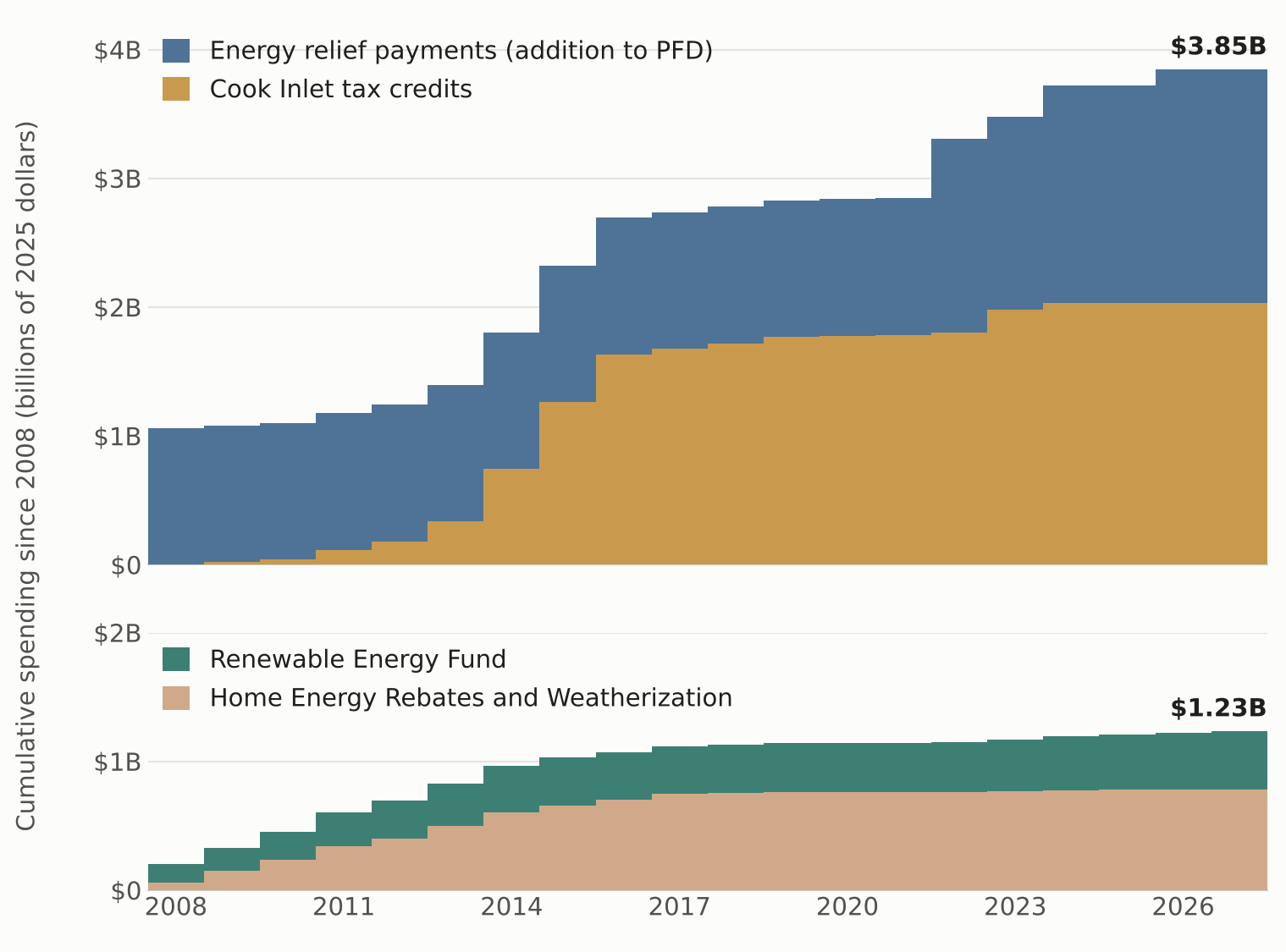
Most of that money went as direct cash to people and oil companies, while a much smaller piece built long term improvements on our grids and in our homes.
We’re more efficient than we used to be
Looking across gas and heating oil (the primary heat sources for most Alaska homes), and correcting for weather, an average home uses significantly less energy than it did a couple decades ago.
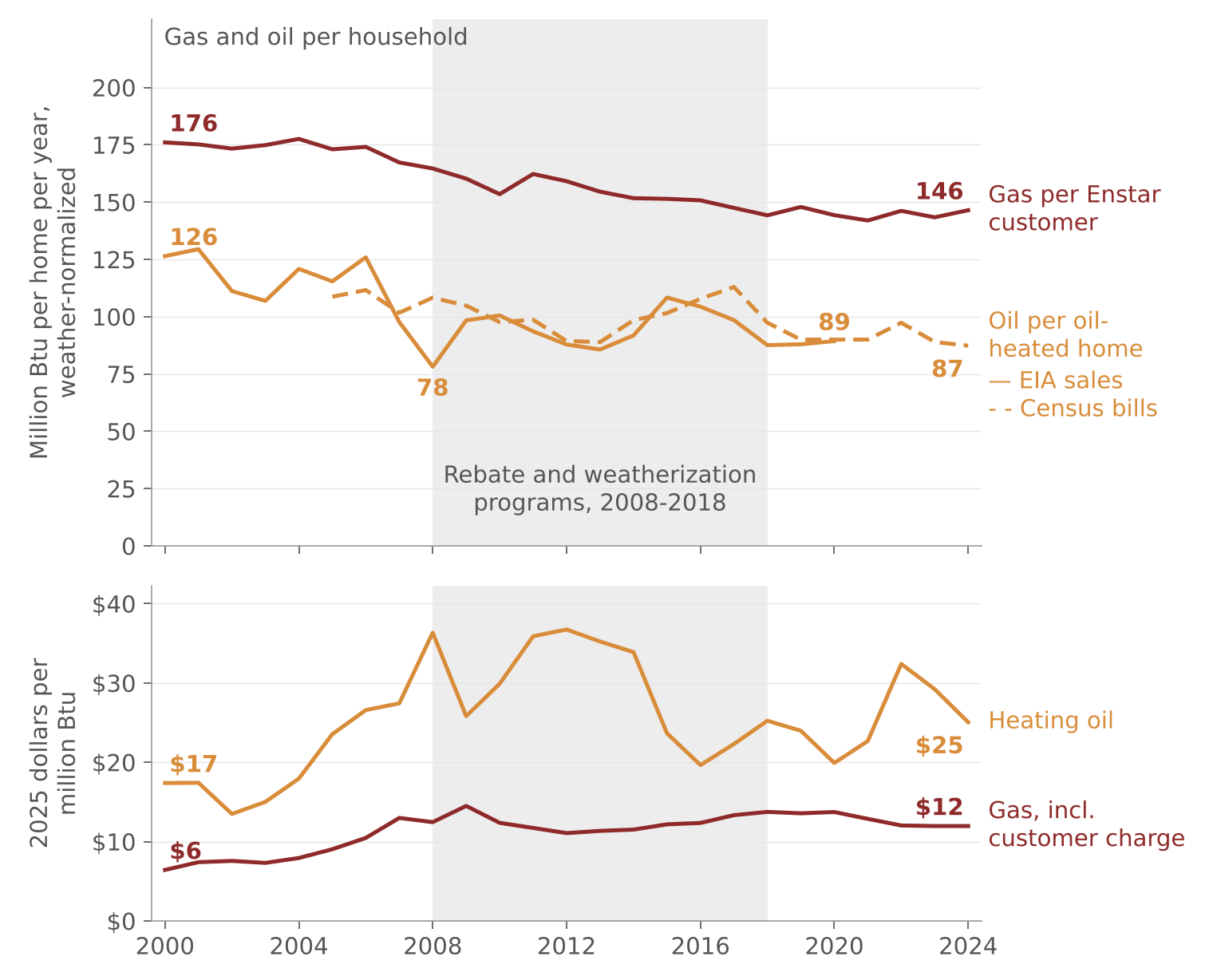
The gas use decline started during the high prices in the mid 2000s, and continued through the weatherization program years (2008-18), appearing to level out around 2020. Statewide heating oil data isn’t great -- it comes from surveys of oil distributors and bill data collected by the census -- but it shows a similar pattern to gas sales. It’s also more volatile, more expensive, and houses use less of it.
Partly this is because oil-heated houses are smaller. A 2018 AHFC database showed houses without gas access were around 20% smaller, and used around 20% less energy for heat. The gap in oil use per home is much bigger than 20%, likely because these homes often also burn wood or use electric heat.
Some of that efficiency was driven by state programs
Between 2008 and 2018, the state put $293 million (2025 dollars) into a home energy rebate program which helped retrofit over 26,000 homes, and $466 million into a low income weatherization program that retrofit around 21,000 homes. Based on energy ratings, those programs were modeled to save around a third of the energy used in each home. Adding that up across all the state, it’s a sizeable chunk of our residential energy.
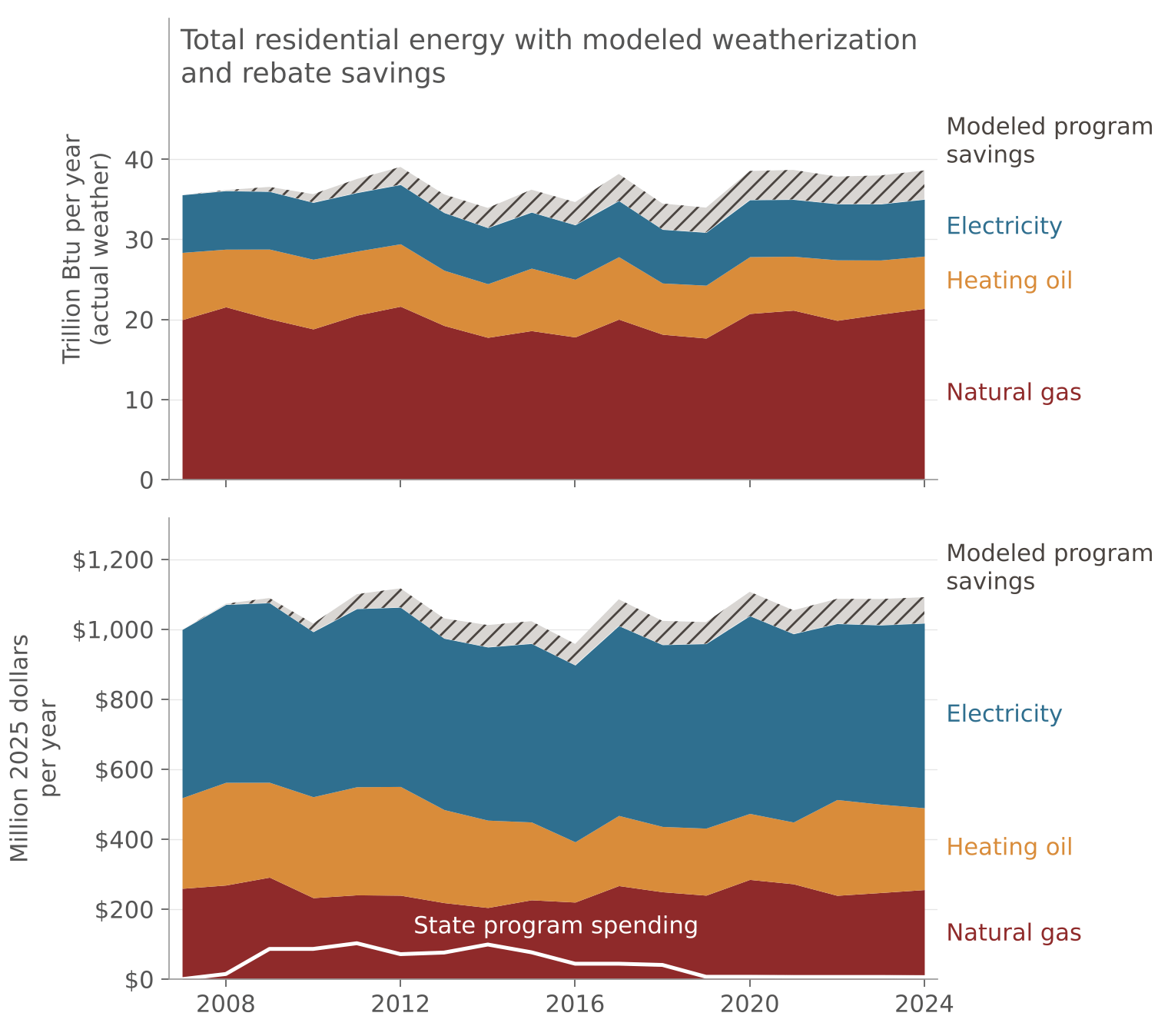
The Cold Climate Housing Research Center reports modeled the overall value of the retrofits across their 21 year life at around $575 million (2025 dollars) more than the state put into them. Homeowners also spent a significant amount above the rebates, while the federal government provided some money towards weatherization. The weatherization program had an 8% return on investment, while the rebates had a 26% return on investment for the homeowners and 11% for society. The overall economic effects were much larger, and included job creation.
The rebate program was open to anyone, reached primarily urban homes, and modeled savings were mostly natural gas (based on fuel savings breakdown of the first several years).
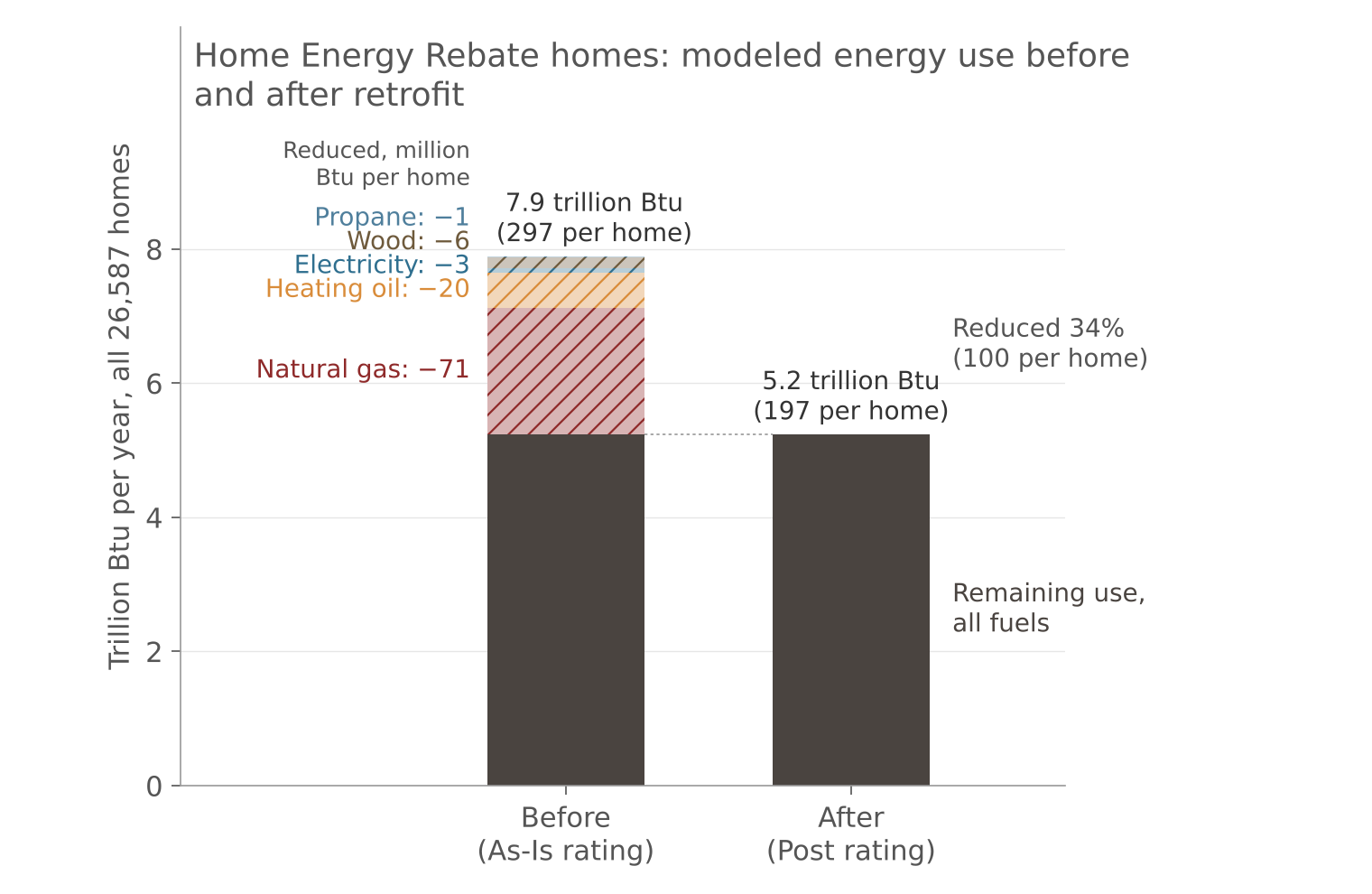
While gas and oil dominated, homes using rebates saved more energy from wood than electricity. Wood isn’t in the overall energy charts since there’s no good data on how much wood gets burned, but it’s more important than it seems. Wood is often used to save money on heating fuel, but it’s an especially polluting form of heat, has a big impact on outdoor and indoor air quality.
The weatherization program was income-based, and reached primarily homes without gas access. There was also a new home construction rebate for efficient homes -- a version of this exists today.
The Home Energy Rebate program offered a bundled second mortgage for energy efficiency to finance improvements beyond what the rebates covered, with very little uptake (at least during the height of the rebates -- I don’t have later data). A nationwide study of efficiency loan programs showed most loans come from just a handful of successful programs, while many others are undersubscribed..
Measuring efficiency is hard
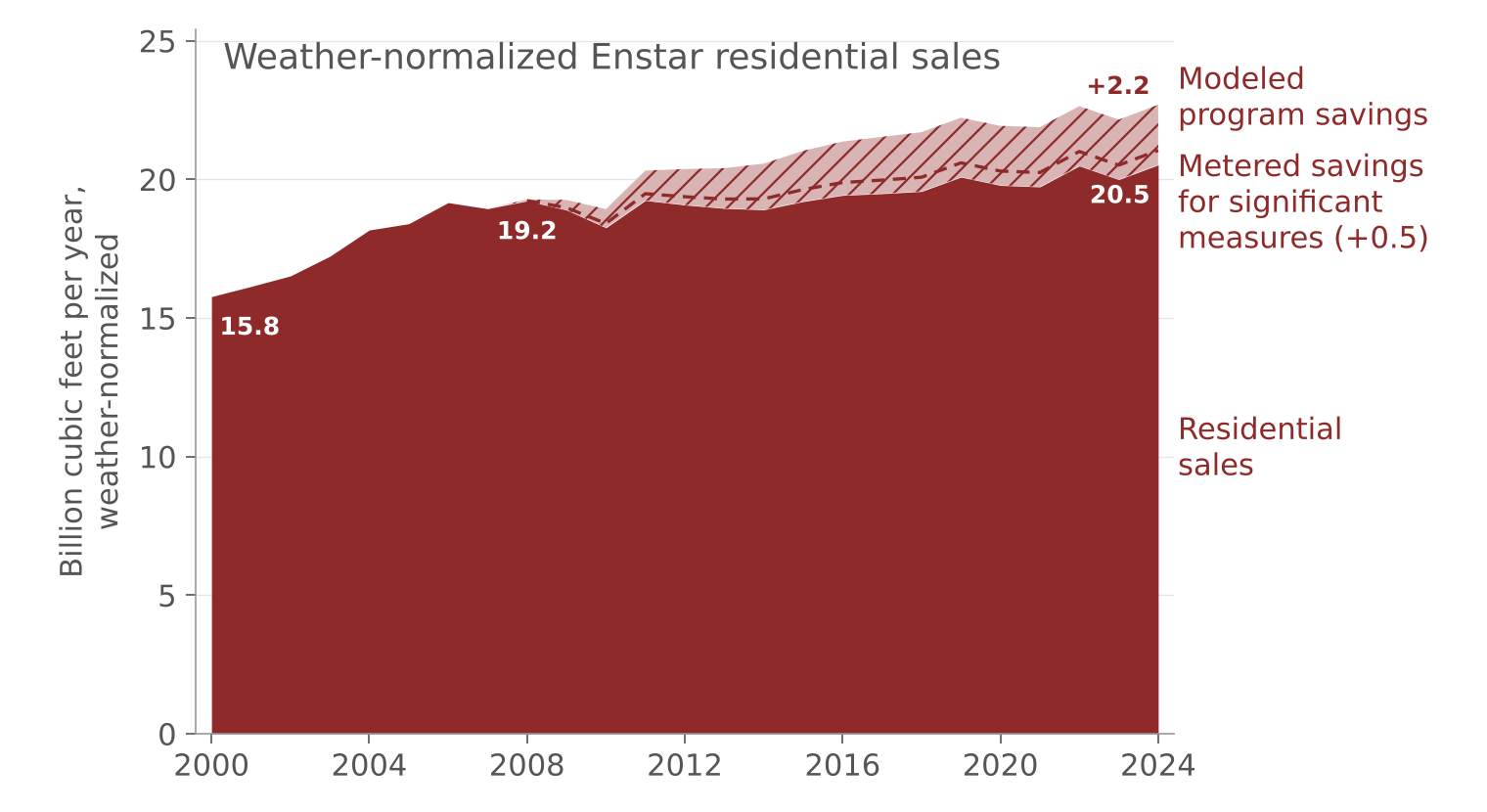
After accounting for weather and population growth, those two programs are modeled as responsible for all of the per capita residential energy savings in the last couple decades. That seems unlikely.
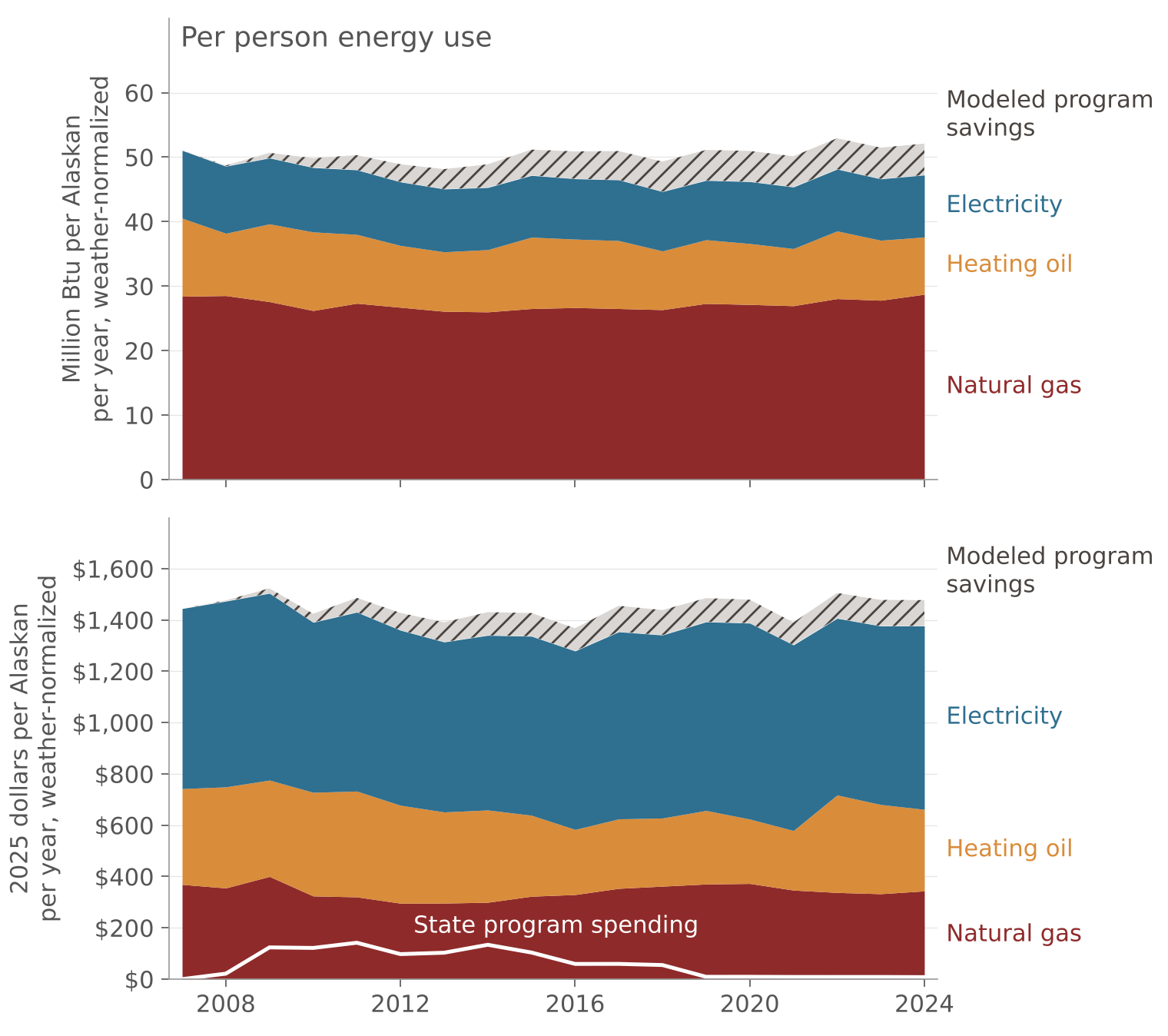
Those programs happened alongside all the complex things that are always changing energy use. Some forces pushed use down, like new homes being built to higher standards, people doing retrofits on their own, or changing their behavior. Some forces pushed the opposite way -- fewer people in each household increased the heating footprint of each person, people in more efficient homes might have chosen to keep them warmer, new houses were larger, and a higher share of people had access to gas -- giving them less incentive to conserve.
All these impacts from efficiency programs are modeled based on energy ratings, which don’t account for the messy reality of people using the houses. A study tracking Enstar bills of retrofit houses was only able to pull out statistically significant numbers for four improvements: air sealing, ceiling insulation, water heater replacement, and heating system replacement. If you did all four in the same house, their average savings would be around 28% of gas use. The reason their savings looks so much smaller than the modeled total is that those measures weren’t done in every house. Other improvements likely saved gas too, but were hidden in the noisy data.
What next?
Cook Inlet gas is in crisis, and buildings burn most of it. Despite the improvements in individual homes, Enstar keeps adding customers, so overall gas use for heat is increasing. The historically low costs of gas heat were propped up by wholesale contracts in Cook Inlet of around $7 or $8 per mcf. New Cook Inlet gas is selling for $17.50 and while no one knows what imports will cost, it’s more likely to be $15 than $8. If wholesale gas were $15, the average Enstar customer would pay $700 more in a year.
People without access to gas have always paid more for energy overall (including heat and electricity), around $1000 per year extra for each home in AHFC’s 2018 data. That swings with oil prices, and is certainly higher today.
So the whole state could use another push for weatherization and efficiency, building off the lessons we learned last time. Two of the efficiency measures the Enstar bill study showed as significantly effective -- ceiling insulation and air sealing -- were some of the programs’ most common recommendations, and were also some of the cheapest. Together, the average cost of both was around $1400 ($1700 in today’s dollars), and they saved 10% of an average home’s gas.
Focusing on cheaper measures could make any new state program less expensive. New technology has opened up some options -- heat pumps are already the cheapest form of heat in some communities, and could save energy in others. We can also take lessons learned from efficiency loan and on-bill financing programs elsewhere to design versions that people will use.